Design
Designing Spaces For People: A Dive Into Curating Skin & Substrate
Designing Spaces For People: A Dive Into Curating Skin & Substrate
Explore how this exhibition encourages people to be original during the rise of artificial intelligence and the current creative climate.
Explore how this exhibition encourages people to be original during the rise of artificial intelligence and the current creative climate.
Introduction
I believe we all contribute differently to the world but form equally important layers. The Oxford English Dictionary defines a palimpsest as a manuscript or piece of writing material on which the original writing has been erased to make room for later writing but on which past traces remain. Manuscripts were typically made of parchment or vellum and palimpsests are a byproduct of the continuous use of these materials. It was considered an ancient form of recycling and allowed for the preservation of the material’s previous uses while adding new layers to it. Palimpsests convey historical knowledge within their many layers, inspiring us to embrace the opportunity to expand our knowledge. This idea inspired me to curate Skin & Substrate. An exhibition highlighting each of us as an important layer to a greater tapestry. The goal was to create an interactive experience that changed as people passed through.
What is Transparency?
To develop a deeper understanding of palimpsests and their importance, we first must confront what it means to be transparent. Transparency means avoiding layers of concealment that distance us from the world, like disregarding the work that came before you. Palimpsests require constant confrontation with the contributions of others. Reminding us that we do not create, live, or absorb in a vacuum. Palimpsests propose a way of thinking about creation that values reuse, renewal, and collaboration across time; an invitation to leave marks that connect us to others and to recognize that no act of making stands alone. Our work is the materialization of echoes of ourselves. It emerges through relationships. Making these relationships visible allows our ideas to be questioned and evolve. While staying readable through simple hierarchies, like blueprints, paintings, writings, and literature, we offer opportunities to deepen ones knowledge through the traces left behind. I wanted to use transparent materials where applicable throughout this work. To further explain what transparency means here.


Making the Thing
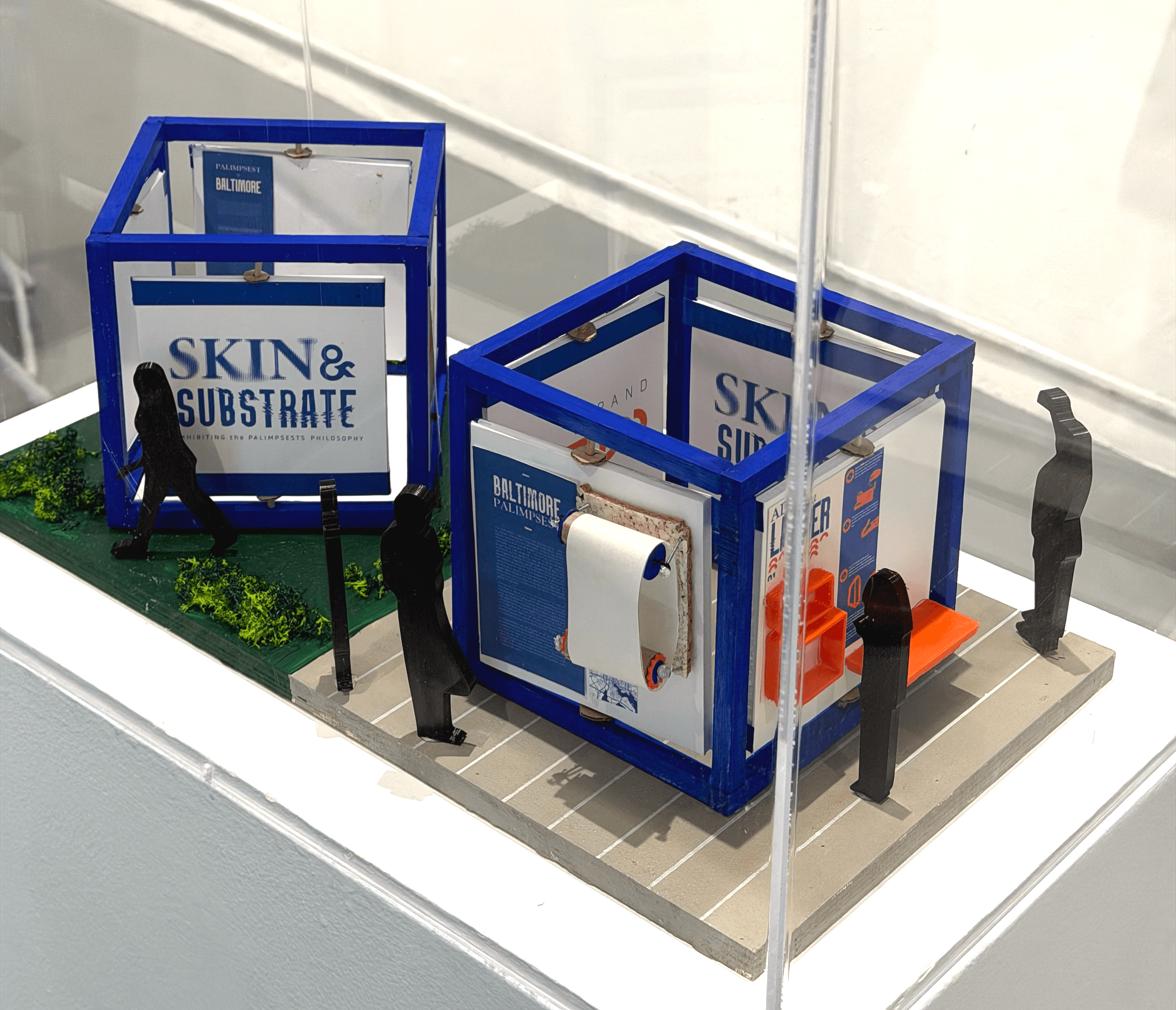
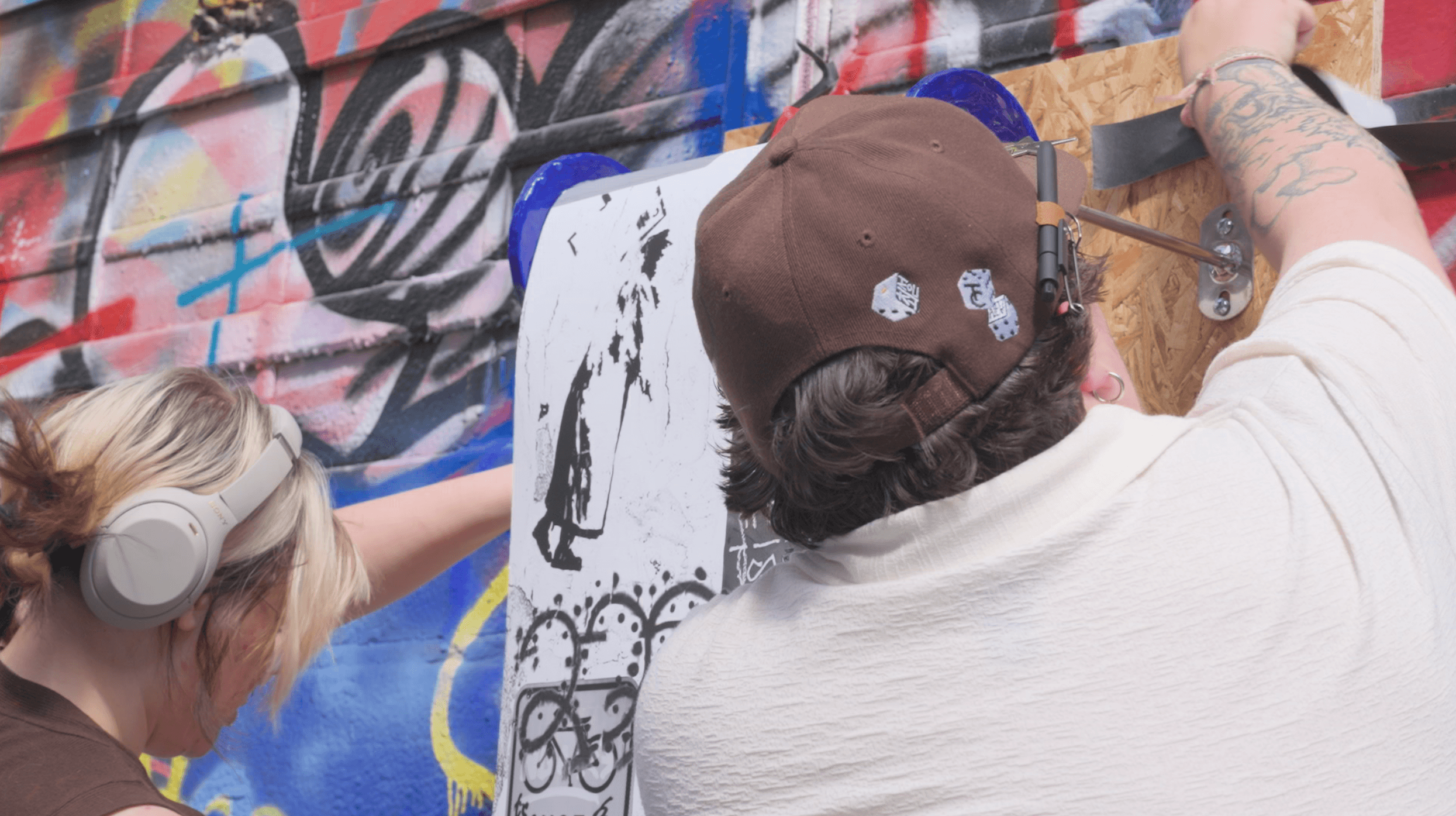
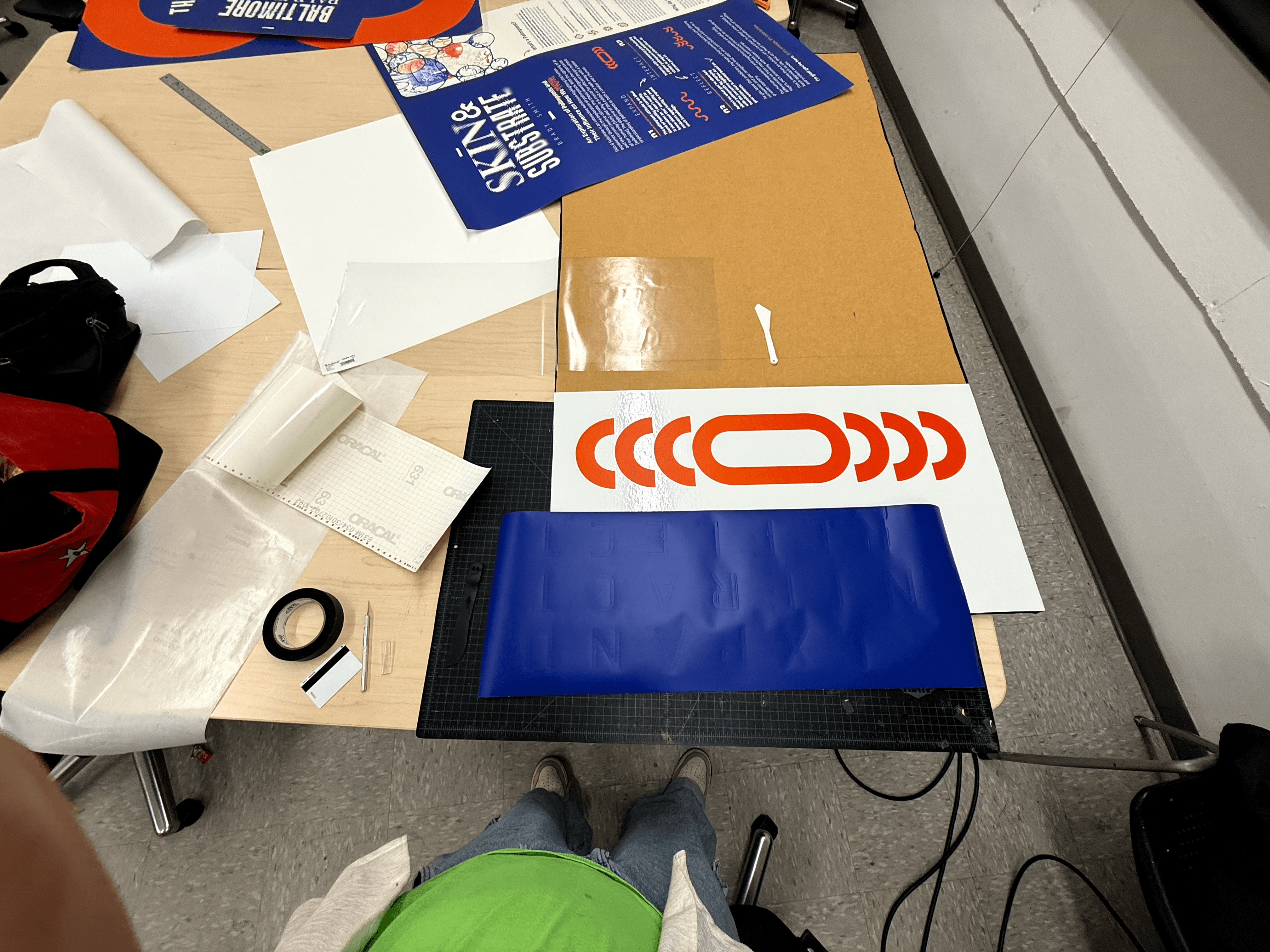
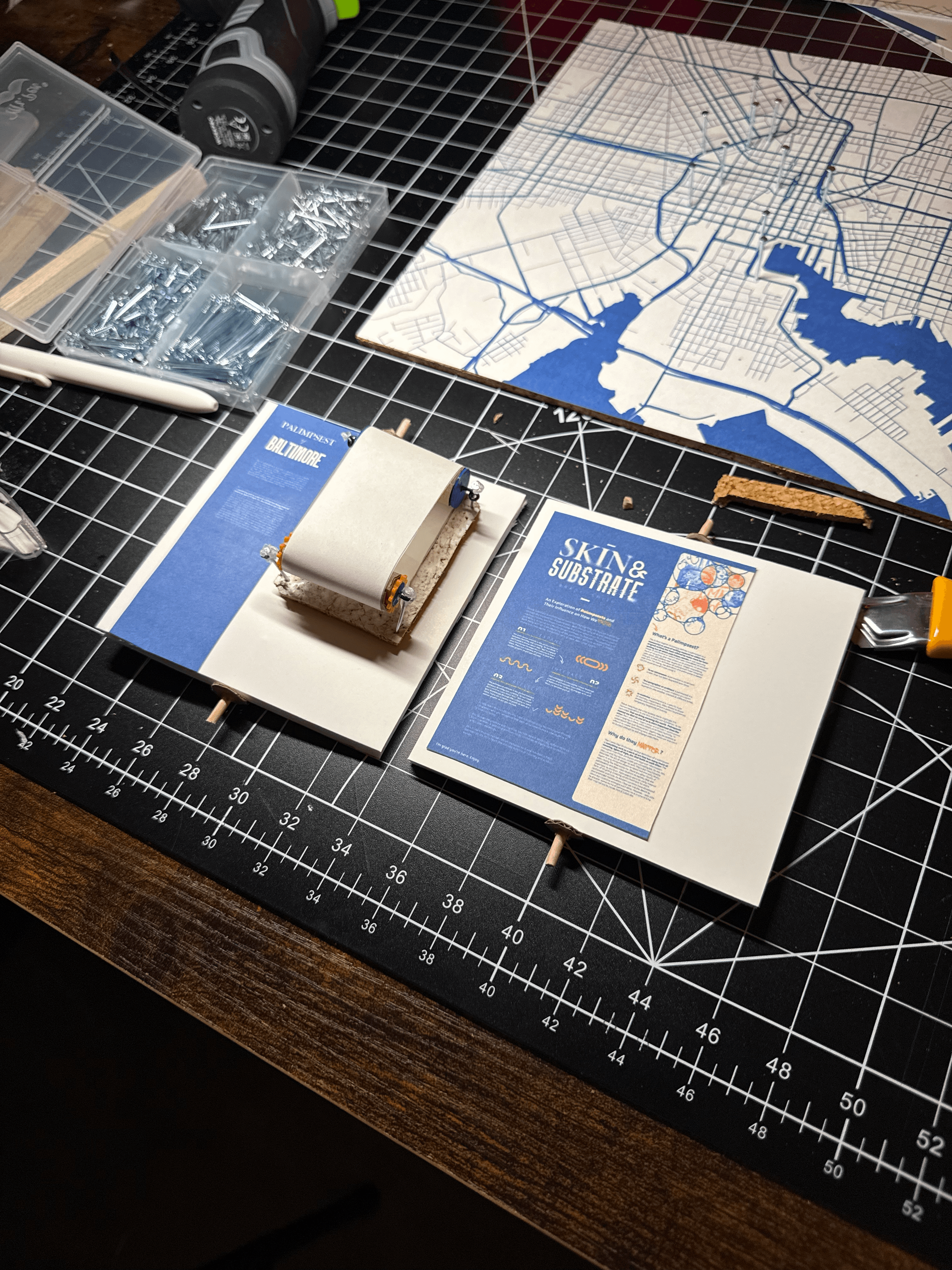
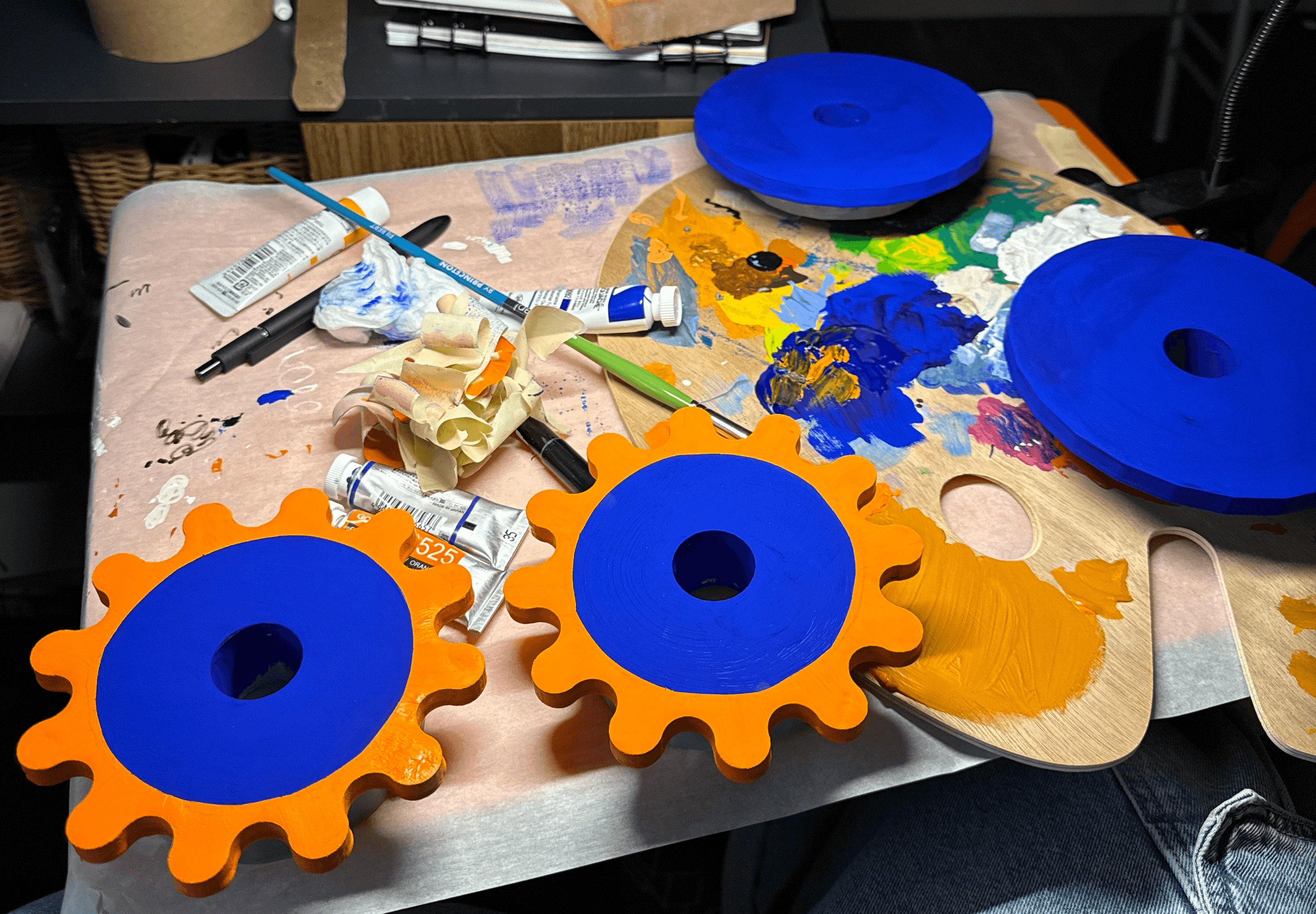
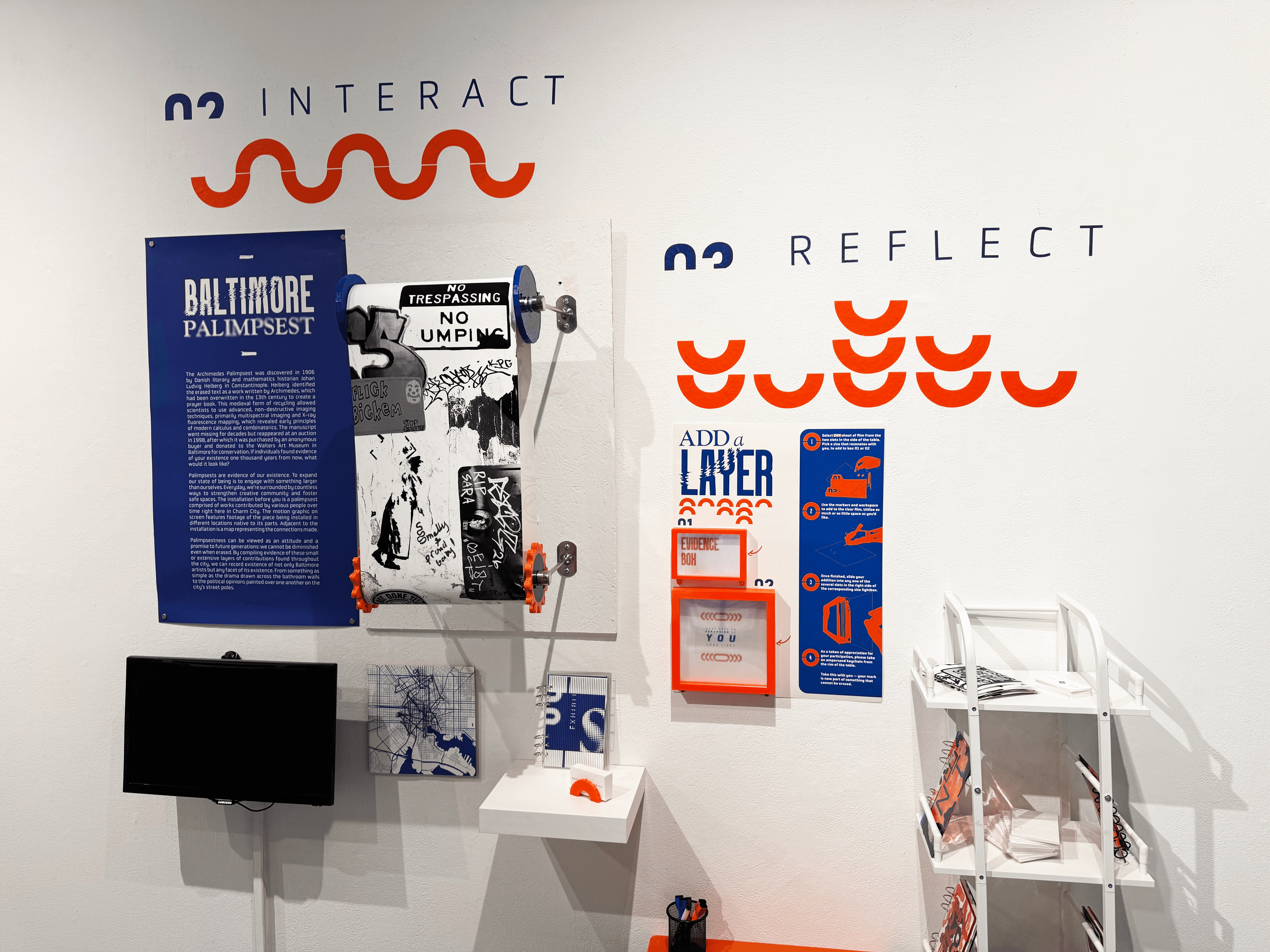
If there is one thing I learned throughout creating this work, it's that people will always somehow use or interact with spaces differently than they were intended. My goal was to embrace that part of our humanity. The exhibition is divided into three subsequent parts: Expand, Interact, Reflect. Each acknowledging an important part of being human. Palimpsests challenge us to continue to develop sustainable practices. They encourage us to acknowledge, and not diminish or deny, the thoughts and contributions of others, in both the past and future. To exhibit this, I took scans of evidence of others' existence in Baltimore and created a rolling print out of it. Text in bathroom stalls, graffiti outside, even old posters ripped down. Printing a single paper wasn't enough, as I wanted the print to change as people passed through interacting with the work. It took a few prototypes but then the rotating print was born. For the Reflect section, I developed 2 lightboxes for people to add to as part of the exhibitions reflection. Inviting individuals to add to the work rather than just consume it.
Conclusion
The show ran from May 14, 2026 through May 20th. I was amazed by how many individuals interacted with the works and didn't shy away from being part of the exhibition.
Latest Blogs
Design
Designing Spaces For People: A Dive Into Curating Skin & Substrate
Designing Spaces For People: A Dive Into Curating Skin & Substrate
Explore how this exhibition encourages people to be original during the rise of artificial intelligence and the current creative climate.
Explore how this exhibition encourages people to be original during the rise of artificial intelligence and the current creative climate.
Introduction
I believe we all contribute differently to the world but form equally important layers. The Oxford English Dictionary defines a palimpsest as a manuscript or piece of writing material on which the original writing has been erased to make room for later writing but on which past traces remain. Manuscripts were typically made of parchment or vellum and palimpsests are a byproduct of the continuous use of these materials. It was considered an ancient form of recycling and allowed for the preservation of the material’s previous uses while adding new layers to it. Palimpsests convey historical knowledge within their many layers, inspiring us to embrace the opportunity to expand our knowledge. This idea inspired me to curate Skin & Substrate. An exhibition highlighting each of us as an important layer to a greater tapestry. The goal was to create an interactive experience that changed as people passed through.
What is Transparency?
To develop a deeper understanding of palimpsests and their importance, we first must confront what it means to be transparent. Transparency means avoiding layers of concealment that distance us from the world, like disregarding the work that came before you. Palimpsests require constant confrontation with the contributions of others. Reminding us that we do not create, live, or absorb in a vacuum. Palimpsests propose a way of thinking about creation that values reuse, renewal, and collaboration across time; an invitation to leave marks that connect us to others and to recognize that no act of making stands alone. Our work is the materialization of echoes of ourselves. It emerges through relationships. Making these relationships visible allows our ideas to be questioned and evolve. While staying readable through simple hierarchies, like blueprints, paintings, writings, and literature, we offer opportunities to deepen ones knowledge through the traces left behind. I wanted to use transparent materials where applicable throughout this work. To further explain what transparency means here.
Making the Thing
If there is one thing I learned throughout creating this work, it's that people will always somehow use or interact with spaces differently than they were intended. My goal was to embrace that part of our humanity. The exhibition is divided into three subsequent parts: Expand, Interact, Reflect. Each acknowledging an important part of being human. Palimpsests challenge us to continue to develop sustainable practices. They encourage us to acknowledge, and not diminish or deny, the thoughts and contributions of others, in both the past and future. To exhibit this, I took scans of evidence of others' existence in Baltimore and created a rolling print out of it. Text in bathroom stalls, graffiti outside, even old posters ripped down. Printing a single paper wasn't enough, as I wanted the print to change as people passed through interacting with the work. It took a few prototypes but then the rotating print was born. For the Reflect section, I developed 2 lightboxes for people to add to as part of the exhibitions reflection. Inviting individuals to add to the work rather than just consume it.
Conclusion
The show ran from May 14, 2026 through May 20th. I was amazed by how many individuals interacted with the works and didn't shy away from being part of the exhibition.
Latest Blogs
Design
Designing Spaces For People: A Dive Into Curating Skin & Substrate
Designing Spaces For People: A Dive Into Curating Skin & Substrate
Explore how this exhibition encourages people to be original during the rise of artificial intelligence and the current creative climate.
Explore how this exhibition encourages people to be original during the rise of artificial intelligence and the current creative climate.
Introduction
I believe we all contribute differently to the world but form equally important layers. The Oxford English Dictionary defines a palimpsest as a manuscript or piece of writing material on which the original writing has been erased to make room for later writing but on which past traces remain. Manuscripts were typically made of parchment or vellum and palimpsests are a byproduct of the continuous use of these materials. It was considered an ancient form of recycling and allowed for the preservation of the material’s previous uses while adding new layers to it. Palimpsests convey historical knowledge within their many layers, inspiring us to embrace the opportunity to expand our knowledge. This idea inspired me to curate Skin & Substrate. An exhibition highlighting each of us as an important layer to a greater tapestry. The goal was to create an interactive experience that changed as people passed through.
What is Transparency?
To develop a deeper understanding of palimpsests and their importance, we first must confront what it means to be transparent. Transparency means avoiding layers of concealment that distance us from the world, like disregarding the work that came before you. Palimpsests require constant confrontation with the contributions of others. Reminding us that we do not create, live, or absorb in a vacuum. Palimpsests propose a way of thinking about creation that values reuse, renewal, and collaboration across time; an invitation to leave marks that connect us to others and to recognize that no act of making stands alone. Our work is the materialization of echoes of ourselves. It emerges through relationships. Making these relationships visible allows our ideas to be questioned and evolve. While staying readable through simple hierarchies, like blueprints, paintings, writings, and literature, we offer opportunities to deepen ones knowledge through the traces left behind. I wanted to use transparent materials where applicable throughout this work. To further explain what transparency means here.
Making the Thing
If there is one thing I learned throughout creating this work, it's that people will always somehow use or interact with spaces differently than they were intended. My goal was to embrace that part of our humanity. The exhibition is divided into three subsequent parts: Expand, Interact, Reflect. Each acknowledging an important part of being human. Palimpsests challenge us to continue to develop sustainable practices. They encourage us to acknowledge, and not diminish or deny, the thoughts and contributions of others, in both the past and future. To exhibit this, I took scans of evidence of others' existence in Baltimore and created a rolling print out of it. Text in bathroom stalls, graffiti outside, even old posters ripped down. Printing a single paper wasn't enough, as I wanted the print to change as people passed through interacting with the work. It took a few prototypes but then the rotating print was born. For the Reflect section, I developed 2 lightboxes for people to add to as part of the exhibitions reflection. Inviting individuals to add to the work rather than just consume it.
Conclusion
The show ran from May 14, 2026 through May 20th. I was amazed by how many individuals interacted with the works and didn't shy away from being part of the exhibition.